Categories
COVID-19

Major Treatment Breakthrough for COVID-19

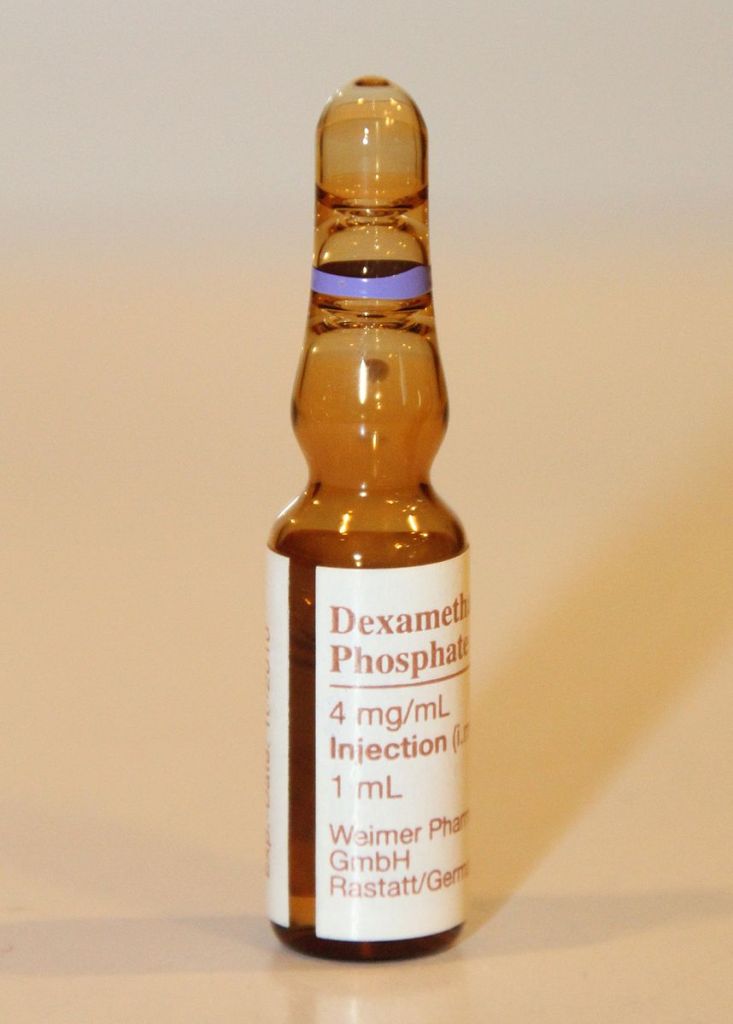
Dexamethasone/LHcheM / CC BY-SA (https://creativecommons.org/licenses/by-sa/3.0)

A brief note today on some big COVID-19 news. Researchers from Oxford have announced that they plan to publish very exciting results from a large trial examining potential treatments for COVID-19. They have shown that dexamethasone (Decadron) reduced mortality by one third (28% vs 40%) when given to patients requiring ventilatory support and by 20% (20% vs 25%) for slightly less severe patients who require only oxygen for support. The study included over 2000 patients receiving dexamethasone and compared them to over 4000 patients recieving standard care. It’s likely that the benefit of dexamethasone comes from reducing the body’s inflammatory overreaction to the virus that affects some people with COVID-19 and can lead to multi-organ failure and death. It did not benefit less severe patients, those who don’t require help with breathing, and in those cases giving dexamethasone may prolong the period of viral shedding. So please don’t rush out and put yourself on dexamethasone as many did with hydroxychloroquine. As always, we’d do better if we listened to experts rather than assume knowledge we don’t have because we saw something on the internet.

This is an incredibly important result for a couple of reasons. First, it’s the only drug to date to demonstrate that it saves lives. Remdesivir if you recall, shortens hospital stays and hastens recovery but the data did not reveal that it reduced mortality. Second, dexamethasone is a cheap steroid well known in the medical community to reduce inflammation. The cost of treating someone for 10 days with dexamethasone and saving their life could be as little as $50.

Dropping mortality from 40% to 28% doesn’t sound remarkable but given the scope of this infection and the number of deaths it translates into very tangible improvements in outcome. In the UK for instance, where this study is based, had the medication been given to patients from the start of the pandemic it would have saved 5000 lives.

Categories
COVID-19

Hope for Remdesivir

The National Institute of Allergy and Infectious Diseases (NIAID) released a statement today indicating that preliminary data from a government-run study of Remdesivir shows that the drug appears to reduce recovery time by 31% (median of 4 days) in patients with advanced COVID-19 disease and lung involvement. It may also have a benefit in mortality though it sounds like that’s less clear. The Remdesivir group had a mortality rate of 8% compared with 11.6% in the placebo group–this, however, did not reach statistical significance.

It definitely falls short of a home run but it’s very good news especially in light of the recently released study from Wuhan China which seemed to show no statistically significant difference between a Remdesivir group and a placebo group. The Chinese study, a double-blind, placebo controlled, multi-center, randomized trial was well designed but it never reached its goal of 453 patients, topping out instead at 237 patients. By March 12 there weren’t enough patients in the region who met the study’s criteria for inclusion. That resulted in an underpowered study and the authors themselves reported this limitation. In effect, if you aren’t able to study a large enough group, your findings may not reach statistical significance–meaning there’s too much of a possibility the findings are a result of chance, whether the medication looked to be beneficial or not. For what it’s worth, the Chinese study suggested a small benefit from Remdesivir.

The NIAID study–also a randomized, controlled trial–looked at 1063 patients with advanced COVID-19 and lung involvement and randomly placed them into either a treatment or a placebo group. The positive results from a study with significantly more power than than the Chinese study will likely lead the FDA to issue an emergency authorization for use of Remdesivir in treating COVID-19, at least for critical patients, since they previously did the same for the anti-malarial drug hydroxychloroquine which had much less evidence supporting its use.

Bear in mind the study data has not been released, only the statement from the NIAID so deep review and analysis is not yet possible. We should always be cautious until the typical scientific process plays out in full.

Still, good news.